





An all too familiar story…
Despite being a global leader in end-to-end solutions and services for the aggregate, mineral processing, and metal refining industries, this industrial machinery company struggled with an inefficient and overly complex documentation process.
Before its merger and the start of its digital transformation, the company produced technical documentation in Microsoft Word for more than 260 products across multiple product lines.
Because everything was created in Word, subject matter experts often made their own copies of manuals to add comments and edits. With multiple reviewers working independently, technical writers were left managing several versions of the same manual, often with conflicting feedback that had to be consolidated into a single, coherent document.
The process technically worked, but it was tedious, time-consuming, and highly prone to human error.
It became clear that a change was needed. The documentation team launched an initiative, with support from Etteplan, to migrate content to the DITA XML open standard.
They also leveraged MadCap IXIA CCMS' component content management system (CCMS) to create, manage, standardize, collaborate, review and publish personalized content from a centralized work environment.
Let’s take a closer look…
The company manages multiple product lines, some developed internally and others acquired. Each line has its own processes, which means documentation often requires customization.
To bring consistency to the process, the team developed a documentation framework outlining the purpose and required structure of manuals. This included guidelines, templates, style standards for content and illustrations, and instructions for writers, reviewers, and SMEs.
They also implemented two separate document management systems, one for equipment deliveries and another for plant deliveries, which added further complexity.
Where things break down
Manuals often ran hundreds or even thousands of pages, which Word could not handle effectively. To work around this, each manual was split into 10 separate chapters. Each chapter became its own document, meaning every delivery created nine additional unnecessary files.
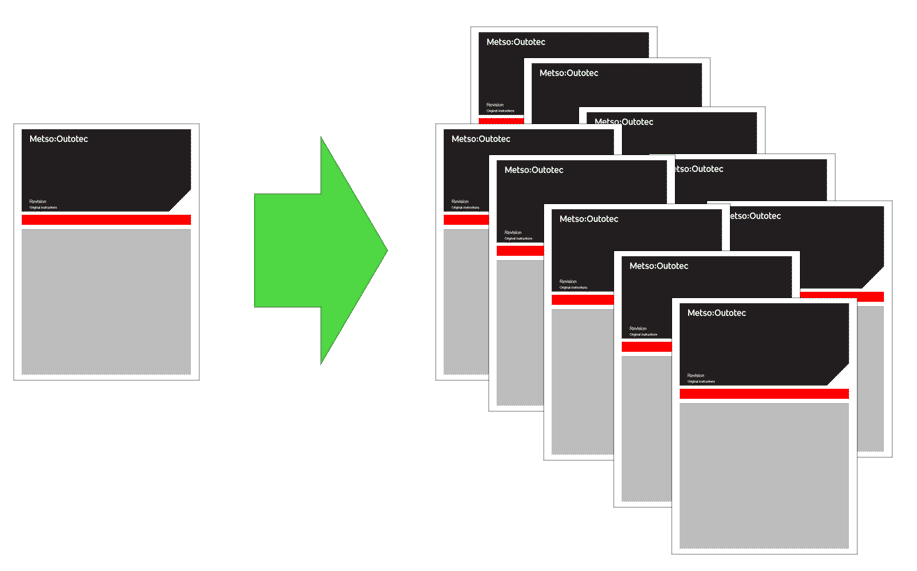
At the same time, multiple reviewers continued creating their own copies, leaving technical writers to reconcile several versions of the same content. Instead of focusing on improving documentation, writers spent most of their time copying, pasting, and reformatting content from previous versions. Desktop publishing tasks consumed a significant portion of their workload.
“While working with Microsoft Word was bearable, it was not really something that you would expect from a technology house,” says a staff member. “There was a lot of high-tech knowledge within our company, but we were still creating content in Word.”
The tipping point…
Two main factors pushed the company toward structured content.
First was the broader industry shift toward digital, structured content. While the mining industry has traditionally relied on printed materials, the team recognized that digital transformation, including AI, analytics, and remote monitoring, was inevitable. They needed a secure and scalable way to manage and deliver content.
Second was the opportunity for cost savings. Beyond reducing expenses, the company saw an opportunity to reclaim time. Instead of spending hours on manual formatting and content assembly, teams could focus on producing higher-quality content and improving delivery.
Migrating legacy content?
Although the company had internal resources, migrating thousands of manuals into structured DITA content required specialized expertise.
Etteplan played a key role. Much of the company’s technical writing was already outsourced to experienced writers familiar with its products. Leveraging that expertise, Etteplan led the migration effort, delivering a structured and well-executed transition.
The role of IXIA CCMS?
Rather than passing around full Word-based manuals, IXIA CCMS introduced a centralized environment where content could be created, edited, and reviewed at the topic level.
Componentizing the content dramatically reduced complexity. What once required managing 10 separate manuals could now be handled as a single structured source. Metadata generation was automated through Oxygen XML Editor, reducing manual effort and minimizing errors.
The company’s products were not standardized. They are highly customized, often engineered or configured to order. This variability meant traditional structured documentation approaches, such as fixed conditionals, were not sufficient.
For example, managing 10 simultaneous deliveries with unique variations would have created a constant cycle of manual updates.
The only viable solution to get around this was MadCap IXIA CCMS' Dynamic Release Management (DRM) module that is designed to support different product models and customer-specific variants.
With DRM, the team created a master manual containing all possible configurations. From this, they could generate delivery-specific outputs without altering the core content.
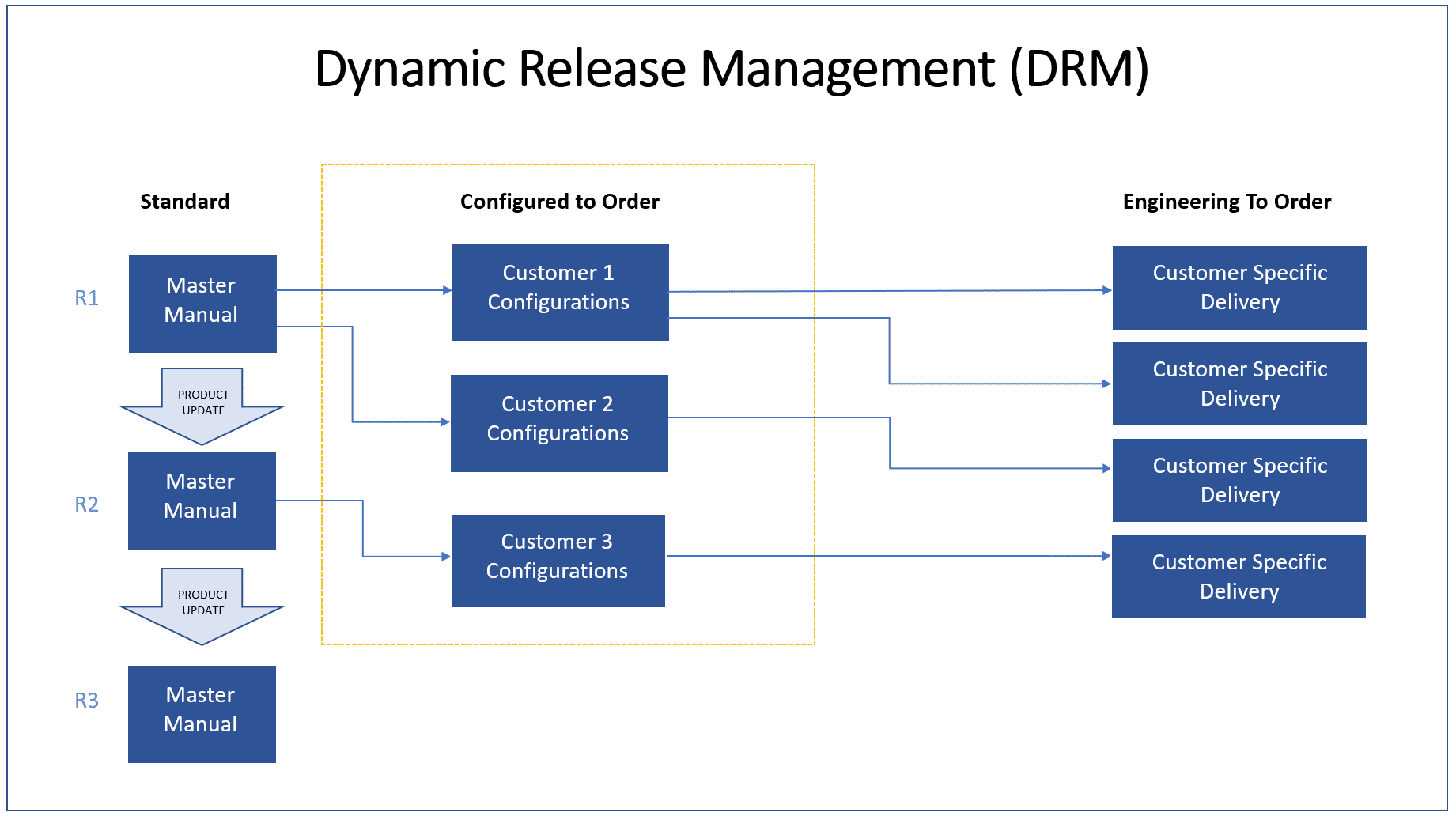
After migrating to structured content, the company created a master manual consisting of all possible options and configurations for a specific product. Obviously, there are product updates which means that the master manual must be updated periodically.
“With some products, it’s enough to configure the output from the master manual, but quite often we have multiple simultaneous deliveries from the same content and each delivery has something that is customer specific,” says Jouni. “The DRM module enables us to use the same shared content throughout products that are configured to order and engineered to order, and DRM allowed us to add or remove content without affecting the master manual.”
Show me the benefits!
What has been gained so far with this transition? The technical writers and reviewers are much more efficient. Instead of having to go through 700-page manuals to try to figure out what has changed from the previous revision, they can now review only the topics that have changed.
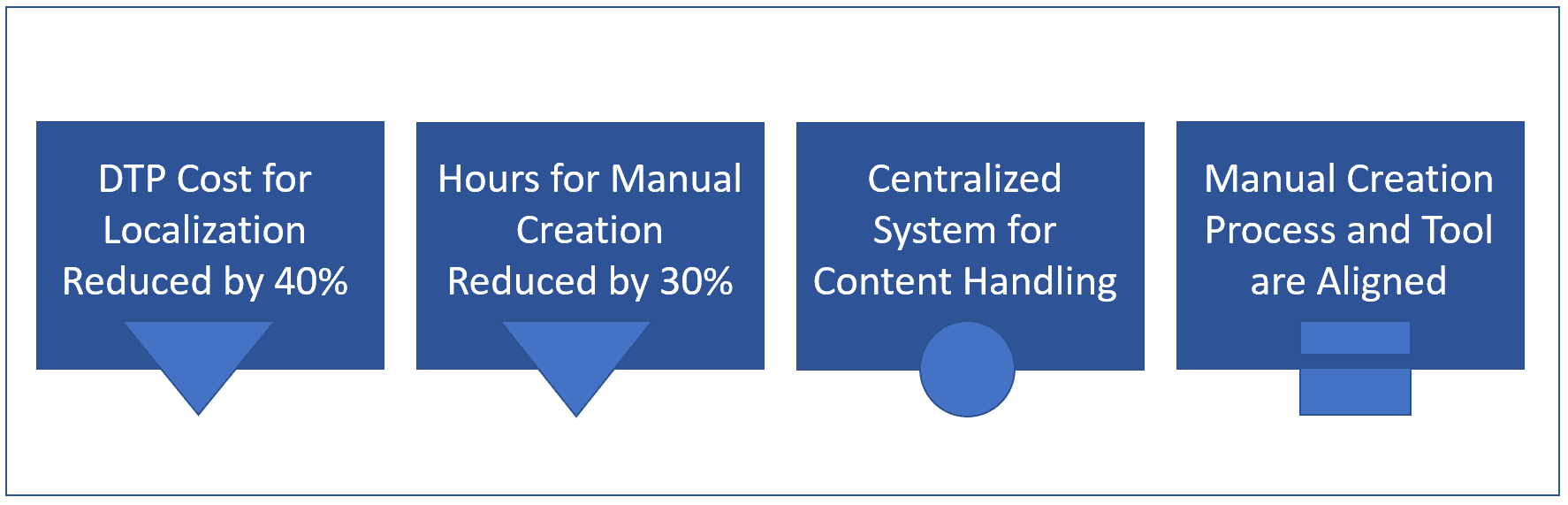
Before digital transformation, the company had one equipment manual that was represented by 10 different chapters. This caused the desktop publishing for localization to be quite high. They managed to cut this cost by 40% annually. Considering that the annual cost for localization is over six figures, this represents a significant amount of savings indeed.
The time it took to create the manuals was also reduced considerably. The technical writers no longer had to work with 10 different manuals and workflows. This represented an efficiency gain of 30% for their most popular product.
The company now has a centralized system for content handling. This means no more network drives that contain fragmented content. Everything is located in one repository where current or earlier revisions are stored. And lastly, the process for creating manuals and the tools to produce them are finally aligned.
Increased efficiency, cost savings and more control over the entire documentation workflow proves that the company made a sound decision to move toward structured DITA content managed through IXIA CCMS’s centralized component content management system.
This blog was originally presented at ConVEx Tempe 2022. Read more about ConVEx conference, and sessions highlights, including sessions by Rocket Software, and the IXIA CCMS team here.